Other Articles
- IAM - Enable User MFA
- IAM - Enforce Key Rotation
- IAM - Enforce Active Key Limit
- IAM - Disable Unused User Credentials
- IAM - Enforce Group Permission
- IAM - Enforce Password Length
- IAM - Prohibit Password Reuse
- IAM - Check Root Access Keys Existence
- IAM - Enable Root MFA
- IAM - Establish Support Role
- IAM - Enable Key Rotation
- Purge Expired Certificates
- EC2 Volume – Enable EBS Volume Backup
- EC2 Volume – Enable EBS Encryption
- EFS – Enable EFS Storage Backup
- S3 Bucket – Enable S3 Bucket Versioning
- S3 Bucket – Enable S3 Bucket Encryption
- S3 Bucket – Block S3 Bucket Public Access
- RDS DB Instance – Encryption of Storage
- RDS DB Instance – Enable Deletion Protection
- RDS DB Instance – Enable Auto Minor Version Upgrade
- DynamoDB Table – Enable Table Encryption
- DynamoDB Table – Enable Table Point In Time Recovery
- DynamoDB Table – Enable Table Deletion Protection
- EKS Cluster – Enable Secrets Encryption
- OpenSearch Domain – Enable Encryption at Rest
- RDS DB Cluster – Retain Backups for 7 Days
- RDS DB Cluster – Encryption of Storage
- RDS DB Cluster – Enable Deletion Protection
- EC2 Instance – Monitor CPU Utilization
- ECS Service – Monitor CPU Utilization
- ECS Service – Monitor Memory Utilization
- RDS DB Instance – Monitor Free Storage Space
- RDS DB Instance – Monitor CPU Utilization
- SQS Queue – Monitor Message Age
- SQS Queue – Monitor Message Visibility
- DynamoDB Table – Monitor Table Read Capacity
- DynamoDB Table – Monitor Table Write Capacity
- DynamoDB Table – Monitor Table Latency
- Enable CloudTrail
- Encrypt CloudTrail Logs
- EC2 VPC – Ensure Flow Logs are Enabled
- EKS Cluster – Enable Control Plane Logging
- CloudWatch Log Group – Enable KMS Encryption
- CloudWatch Log Group – Configure Retention
- Load Balancer – Enable Access Logs
- RDS DB Instance – Block Public Access
- EC2 Security Group – Restrict Public SSH and RDP Access
- EC2 Security Group – Restrict Public Database Access
- EKS Cluster – Restrict Public Endpoint
- EC2 VPC – Restrict Default Security Group Traffic
- Load Balancer – Redirect HTTP Traffic to HTTPS
- OpenSearch Domain – Enable Node-to-Node Encryption
- OpenSearch Domain – Enforce HTTPS
- OpenSearch Domain – Restrict Public Access
- RDS DB Cluster – Block Public Access
- EC2 Instance – Enable Deletion Protection
- ECS Service – Enable Auto Scaling
- Load Balancer – Enable Deletion Protection
- Enable AWS Security Hub
- Enable GuardDuty
- CloudFront Distribution – Enforce HTTPS for Viewers
- CloudFront Distribution – Require TLS 1.2 for Viewers
- CloudFront Distribution – Associate a WAF Web ACL
- CloudFront Distribution – Protect S3 Origin Access
- KMS Key – Avoid Pending Deletion
- SNS Topic – Enable Encryption
- SNS Topic – Restrict Topic Policy Access
Load Balancer – Use Strong TLS Policies
Secure Configuration Checks > AWS
This check ensures that the HTTPS and TLS listeners of your load balancers use a security policy that requires TLS 1.2 or newer. Older protocol versions, TLS 1.0 and TLS 1.1, have known weaknesses and are no longer considered secure.
Check Details
- Resource: Application Load Balancer and Network Load Balancer listener
- Check: Use strong load balancer TLS policies (
TlsPolicyStrong) - Risk: Attackers can force a weak protocol version and break or downgrade the encryption of traffic to your application
Security policy examples
The name of a policy shows the lowest TLS version that it allows.
The policies below are examples. Use aws elbv2 describe-ssl-policies to see the full, current list.
- Compliant:
ELBSecurityPolicy-TLS13-1-2-2021-06,ELBSecurityPolicy-TLS13-1-3-2021-06,ELBSecurityPolicy-TLS-1-2-2017-01,ELBSecurityPolicy-TLS-1-2-Ext-2018-06 - Non-compliant:
ELBSecurityPolicy-2016-08,ELBSecurityPolicy-TLS-1-0-2015-04,ELBSecurityPolicy-TLS-1-1-2017-01,ELBSecurityPolicy-FS-2018-06
Remediation via AWS Console
-
Open the Amazon EC2 console and select Load Balancers under Load Balancing.
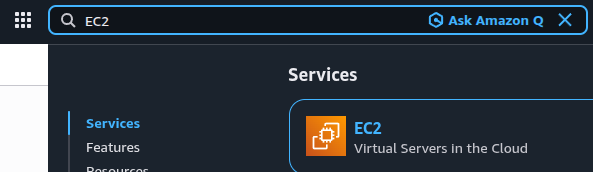
-
Select the affected load balancer and open the Listeners and rules tab.

-
Click the listener's Protocol:Port link for the HTTPS or TLS listener.
-
Open the Security tab and click Edit secure listener settings.
-
Under Secure listener settings, select a Security policy that requires TLS 1.2 or newer, such as
ELBSecurityPolicy-TLS13-1-2-2021-06.
-
Click Save changes. Repeat for every secure listener on each affected load balancer.
Remediation via AWS CLI
-
Log in to the AWS Management Console and click the CloudShell icon (
>_) in the top-right corner.
-
List the HTTPS and TLS listeners that use a policy which still allows TLS 1.0 or TLS 1.1. The output shows the listener ARN and the policy name:
WEAK=$(for t in application network; do
  aws elbv2 describe-ssl-policies --load-balancer-type $t \
  --query "SslPolicies[?contains(SslProtocols, 'TLSv1') || contains(SslProtocols, 'TLSv1.1')].Name" \
  --output text
done)

for arn in $(aws elbv2 describe-load-balancers \
  --query 'LoadBalancers[?Type==`application` || Type==`network`].LoadBalancerArn' \
  --output text); do
  aws elbv2 describe-listeners --load-balancer-arn "$arn" --output json | \
 jq -r --arg weak "$WEAK" '
    ([$weak | splits("\\s+")]) as $w
    | .Listeners[]
    | select(.Protocol == "HTTPS" or .Protocol == "TLS")
    | select(.SslPolicy as $p | ($w | index($p)) != null)
| [.ListenerArn, .SslPolicy]
| @tsv'
done
The command covers one region. Add
--region <region>to eachawscommand to check another. -
Change the security policy of the listener:
aws elbv2 modify-listener \
--listener-arn <listener-arn> \
--ssl-policy ELBSecurityPolicy-TLS13-1-2-2021-06
-
Verify the policy of the listeners:
aws elbv2 describe-listeners \
--load-balancer-arn <load-balancer-arn> \
--query "Listeners[?Protocol=='HTTPS' || Protocol=='TLS'].[ListenerArn,SslPolicy]" \
--output table
Each listener must show a policy that requires TLS 1.2 or newer.
Replace <listener-arn> with the ARN of the listener that step 2 lists.
Replace <load-balancer-arn> with the ARN of the load balancer.
Repeat steps 3 and 4 for each listener that step 2 lists.
Updated on 04 November, 2026