Other Articles
- IAM - Enable User MFA
- IAM - Enforce Key Rotation
- IAM - Enforce Active Key Limit
- IAM - Disable Unused User Credentials
- IAM - Enforce Group Permission
- IAM - Enforce Password Length
- IAM - Prohibit Password Reuse
- IAM - Check Root Access Keys Existence
- IAM - Enable Root MFA
- IAM - Establish Support Role
- IAM - Enable Key Rotation
- Purge Expired Certificates
- EC2 Volume – Enable EBS Volume Backup
- EC2 Volume – Enable EBS Encryption
- EFS – Enable EFS Storage Backup
- S3 Bucket – Enable S3 Bucket Versioning
- S3 Bucket – Enable S3 Bucket Encryption
- S3 Bucket – Block S3 Bucket Public Access
- RDS DB Instance – Encryption of Storage
- RDS DB Instance – Enable Deletion Protection
- RDS DB Instance – Enable Auto Minor Version Upgrade
- DynamoDB Table – Enable Table Encryption
- DynamoDB Table – Enable Table Point In Time Recovery
- DynamoDB Table – Enable Table Deletion Protection
- EC2 Instance – Monitor CPU Utilization
- ECS Service – Monitor CPU Utilization
- ECS Service – Monitor Memory Utilization
- RDS DB Instance – Monitor Free Storage Space
- RDS DB Instance – Monitor CPU Utilization
- SQS Queue – Monitor Message Age
- DynamoDB Table – Monitor Table Read Capacity
- DynamoDB Table – Monitor Table Write Capacity
- DynamoDB Table – Monitor Table Latency
- Enable CloudTrail
- Encrypt CloudTrail Logs
- EC2 VPC – Ensure Flow Logs are Enabled
- RDS DB Instance – Block Public Access
- EC2 Instance – Enable Deletion Protection
- ECS Service – Enable Auto Scaling
- Enable AWS Security Hub
- Enable GuardDuty
SQS Queue – Monitor Message Visibility
Secure Configuration Checks > AWS
This check ensures that the visibility timeout for Amazon SQS queues is properly configured. A correct visibility timeout prevents messages from being processed multiple times and helps ensure reliable message handling.
Check Details
- Resource: SQS Queue
- Check: Monitor SQS message visibility timeout
- Risk: Messages may be processed multiple times or lost due to incorrect timeout configuration
Remediation via AWS Console
-
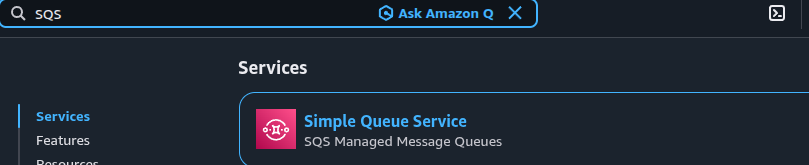
Log in to the AWS Management Console and open the Amazon SQS console.
-
Click Queues and select the required SQS queue.

- Click Edit.
-
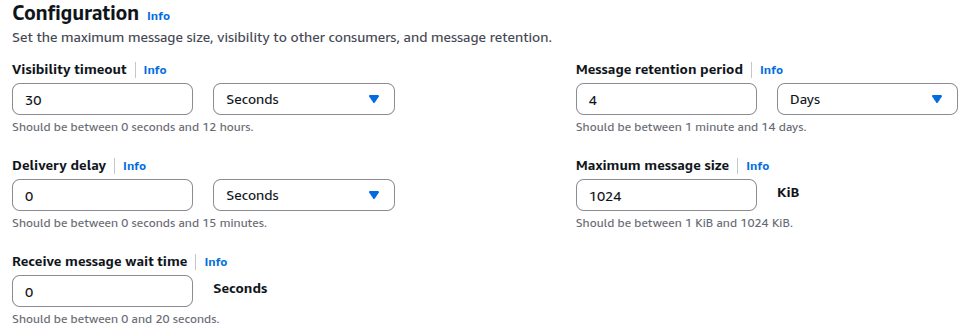
Under Details, set the Default visibility timeout to a value between 30 and 300 seconds.
- Click Save.
Remediation via AWS CLI
-
Log in to the AWS Management Console and click the CloudShell icon (
>_) in the top-right corner.
-
Set the visibility timeout for the SQS queue:
aws sqs set-queue-attributes \
--queue-url <queue-url> \
--attributes VisibilityTimeout=30
Replace
<queue-url>with the actual SQS queue URL.
Updated on 06 March, 2026