Other Articles
Organogram
The Organogram provides a visual representation of your organization’s reporting structure. It clearly displays how employees are connected, who reports to whom, and how departments are structured — all in one view.
This feature helps HR teams, leadership, and management quickly understand hierarchy and reporting relationships at a glance.
Why the Organogram is Important
A well-defined reporting structure supports:
- Clear accountability
- Defined reporting lines
- Better communication flow
- Faster decision-making
- Strong governance structure
- Audit clarity during HR and compliance reviews
For growing organizations, having a visual hierarchy eliminates confusion and ensures everyone understands their position within the company.
How It Works
The Organogram is automatically generated and updated based on the reporting managers assigned to employees in the system.
When:
- A new employee is added
- A reporting manager is assigned or updated
- A department change is made
The Organogram instantly reflects those changes without manual intervention.
This automation ensures:
- Real-time accuracy
- Reduced administrative effort
- No duplication of hierarchy records
- Consistent data across HR and compliance modules
Benefits for HR & Leadership
For HR Teams
- Easy validation of reporting structures
- Quick identification of vacant positions
- Clear succession planning view
- Support during onboarding and restructuring
For Leadership
- Visual overview of organizational layers
- Better workforce planning
- Improved departmental alignment
- Clarity during strategic planning
Compliance & Governance Perspective
From an audit and compliance standpoint, the Organogram:
- Demonstrates defined roles and responsibilities
- Supports segregation of duties
- Shows management oversight structure
- Serves as evidence during ISO, SOC 2, or internal audits
It helps auditors verify whether responsibilities are properly assigned and whether reporting lines are formally documented.
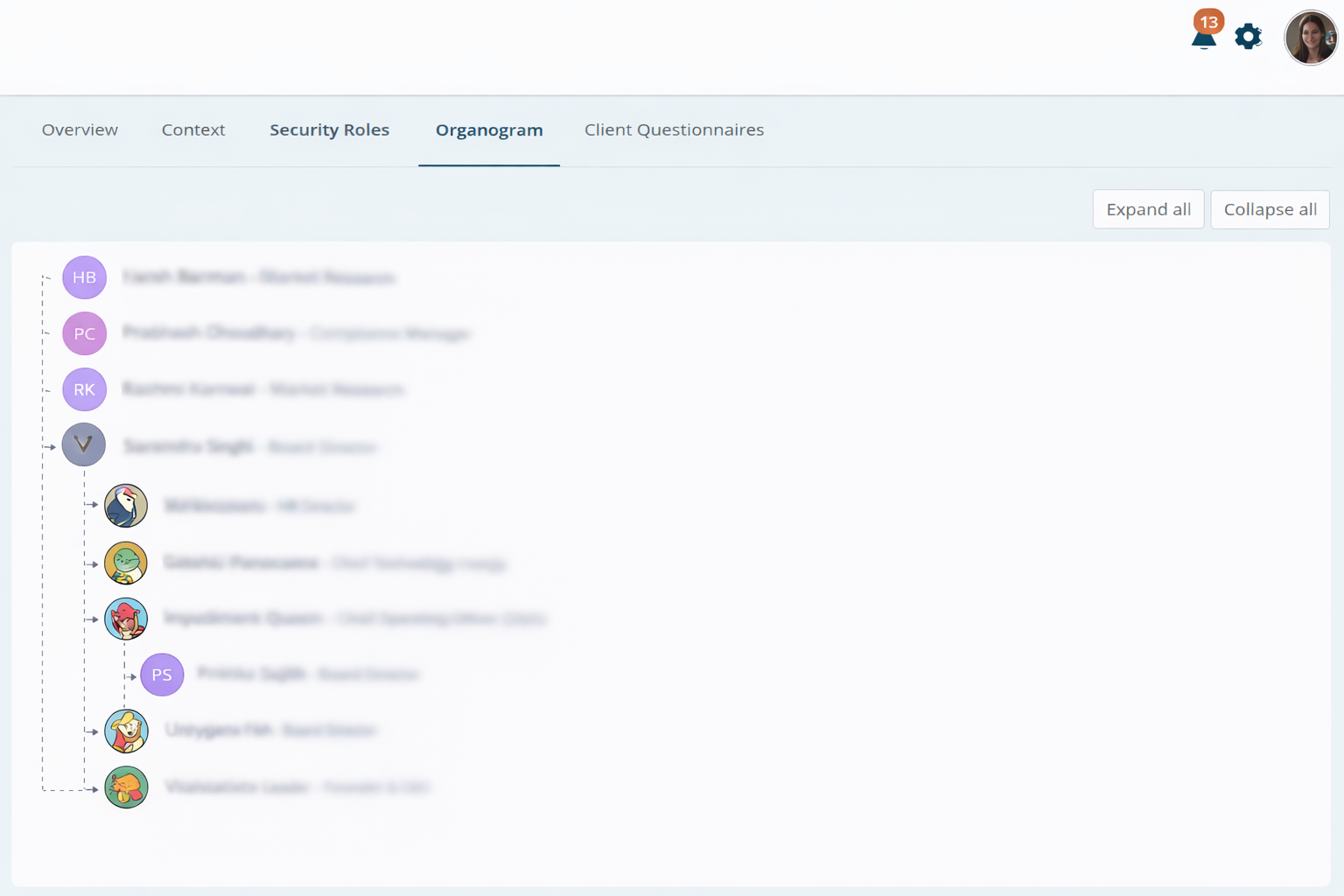
Organogram view showing reporting structure.